Lecture by Professor Volker Dellwo
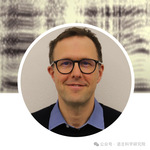
About the Speaker
Volker Dellwo is Professor of Phonetics at the University of Zurich, where he leads the Phonetics & Speech Sciences Group and the Centre for Forensic Phonetics and Acoustics. His interdisciplinary research examines how speaker identity is encoded, perceived, and modelled in human and machine speech processing, with particular interests in forensic phonetics, voice biometrics, machine learning, synthetic speech and voice-language relationships.
Lecture Time & Venue
Time: September 29 (Tuesday), 12:30–13:30
Venue: Room 136, Building 5, Songjiang Campus
Lecture Title
Voice identity as a communicative signal
Lecture Abstract
Human listeners recognise others from identity cues in the voice, yet these cues are not equally available across speaking styles. In this talk, I will report on a broad programme of ongoing collaborative research comparing styles with contrasting communicative functions. I will demonstrate that infant-directed and romantic-partner-directed speech facilitate voice-identity processing, whereas clear and deceptive speech do not. The advantage of affiliative styles is consistent with the proposal that revealing identity helps establish and maintain social bonds. It is associated with fundamental-frequency sweeps and apparent vocal-tract-length modulations, which may make speaker-specific vocal-tract information more recoverable. Deceptive speech, by contrast, may disrupt identity processing because speakers deliberately manipulate or conceal habitual vocal characteristics. Clear speech prioritises linguistic intelligibility, but its articulatory enhancements do not necessarily increase—and may redistribute—speaker-specific information. Time permitting, I will also present work examining whether these effects transfer to synthetic speech by conditioning zero-shot text-to-speech systems on different speaking styles and assessing the resulting effects on speaker identifiability. Together, these findings suggest that speaking styles shape identity information according to their communicative goals and that vocal identity is a dynamic and socially functional component of speech.
Lecture by Professor He Lei
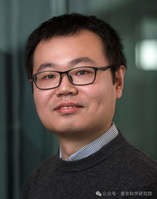
About the Speaker
Lei He is a Tenure-Track Research Professor at the Institute of Modern Languages and Linguistics, Fudan University. He received his PhD from the University of Zurich. His research focuses on experimental phonetics, speech production and physiological characteristics, speaker individuality, speech pathology, and speech rhythm. Before joining Fudan, he held research positions at the University of Zurich and University Hospital Zurich, and previously worked at the University of Tübingen.
He Lei is a Young Researcher at the Institute of Modern Languages and Linguistics, Fudan University. He received his Ph.D. from the University of Zurich. His research mainly focuses on experimental phonetics, speech production and physiological characteristics, speaker individuality, speech pathology, and speech rhythm. Before joining Fudan University, he conducted research at the University of Zurich, University Hospital Zurich in Switzerland, and the University of Tübingen in Germany.
Lecture Time & Venue
Time: September 29 (Tuesday), 13:30–14:30
Venue: Room 136, Building 5, Songjiang Campus
Lecture Title
Rendez-vous between speech science and ENT research
Lecture Abstract
In this talk I will present two recent studies using speech and voice analysis for the evaluation of otorhinolaryngological conditions. Both studies involve development of new approaches for the analysis of speech/voice-related signals, and tested how these new approaches can help for characterizing common conditions in the larynx and in the pharynx. The first study introduces a new approach for the analysis of electroglottographic (EGG) variabilities in dysphonic voices varying in pitch levels and vowels. The second study introduces a new approach for the analysis of nasometric signals for the evaluation of pediatric adenotonsillar hypertrophy.