The Institute of Language Sciences will continue to uphold the spirit of scientific innovation, fully leverage Shanghai International Studies University's strengths in language research, engage with the frontiers of contemporary linguistic science, and promote the advancement of Language Sciences.
The Institute currently has an international faculty team consisting of 39 full-time teaching and research staff, including 19 professors/researchers (including 4 foreign experts), 10 associate professors/associate researchers (including 3 foreign experts), and 9 lecturers/assistant researchers. In addition, the Institute has employed a number of distinguished domestic and international scholars as adjunct/visiting researchers. The Institute has 2 Changjiang Scholars, 1 Ten Thousand Talents Program Young Top-Notch Talent, 4 Elsevier Highly Cited Chinese Researchers, and 4 editors-in-chief/associate editors of SSCI and A&HCI journals. Furthermore, the faculty team of the Language Data Science and Applications program has been selected as one of the third batch of National University Huang Danian-style Teacher Teams by the Ministry of Education.
The corpus research team, led by Professor Hu Kaibao, actively conducts corpus-related research while promoting academic exchange in corpus research and applications. Since the inaugural National Corpus Translation Studies Summer Workshop in 2012, the team has consistently organized annual summer training activities on corpus research and applications for over a decade, receiving positive social feedback and a strong training reputation.
To further promote the application of corpora in foreign language teaching and research as well as other related fields, and to strengthen academic exchange in this area, the Institute of Language Sciences at Shanghai International Studies University regularly organizes a series of summer training programs in Language Sciences each year.
In 2026, the Institute is offering higher-quality training activities. The training will be delivered through a combination of online and offline formats, employing expert lectures, case discussions, and hands-on practice for participants. Starting with research methodologies, the program will introduce corpus construction and application, methods and applications of large language models in language research, translation studies, and literary studies, as well as specific operations in linguistic science methods research and practice. It aims to explore the pathways of corpus application across different fields, with the goal of enhancing the ability of language teachers, students, and scholars to use corpora in foreign language research.
1. Summer Workshop Series Schedule
PART/01
Workshop on Methods and Practice in Linguistic Science Research
Course Content:
This training program rejects superficial theoretical indoctrination and is designed around the core principle of recreating real research scenarios. Technical depth: It covers the three golden tools of language research—eye-tracking, EEG, and R statistics—with comprehensive walkthroughs from device principles to operational details. Practical closed-loop: Each technical module includes a three-step process of laboratory observation—data collection—analysis practice. For example, in the eye-tracking course, participants will personally experience reading experiments, collect data, and perform analysis. This course will guide participants through hands-on practice with commonly used software packages in psycholinguistic research, including the experimental programming software PsychoPy, the EEG data preprocessing module MNE, and the linear mixed-effects model toolkit lme4.
[Day 1] Focuses on fundamental principles of research design and PsychoPy experimental programming. Course content covers experimental design and cutting-edge techniques in psycholinguistics/neurolinguistics, as well as PsychoPy experimental programming.
[Day 2] Practical statistical testing (based on R) and eye-tracking experimental techniques. Course content covers foundational statistical hypothesis testing, introduction to eye-tracking methodology, eye-tracking project practice (including laboratory observation), and eye-tracking data processing and paper writing.
[Day 3] Advanced statistical modeling (based on R) and EEG experimental techniques. Course content covers implementation of multivariate statistical models in R, introduction to EEG techniques, EEG project practice (including laboratory observation), and EEG data processing and paper writing.
Specific Course Schedule:
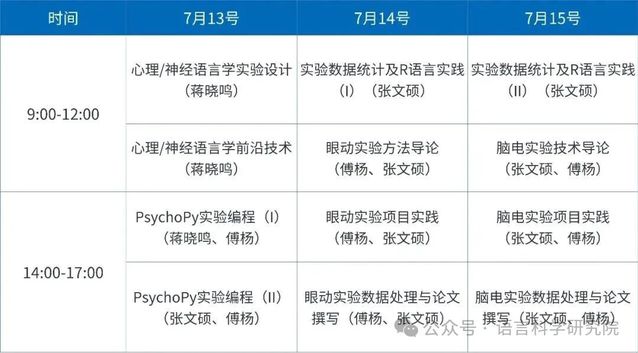
Training Period: July 13–15, 2026
Training Experts: Professor Jiang Xiaoming, Assistant Researcher Zhang Wenshuo, Assistant Researcher Fu Yang
Training Venue: Offline (Lecture Hall 136, Building 5, Songjiang Campus, Shanghai International Studies University) + Online (Tencent Meeting)
Registration Method: Online registration and payment
Registration Period: May 1 – July 13, 2026
Fee Structure:
Offline:
Non-students: RMB 3,000/person
Students: RMB 2,200/person (student ID required)
Group registration of 5 or more: RMB 2,000/person (not combinable with student discount)
Online:
Non-students: RMB 2,600/person
Students: RMB 1,800/person (student ID required)
Group registration of 5 or more: RMB 1,600/person (not combinable with student discount)
PART/02
Workshop on the Micro-major in Language Data Science
Micro-major Introduction:
The Language Data Science micro-major is based on the Language Data Science and Applications program at the Institute of Language Sciences, Shanghai International Studies University. The Language Data Science and Applications discipline was newly established at the Institute of Language Sciences in 2020. On the one hand, this discipline aligns with the Ministry of Education's New Liberal Arts development strategy and conforms to the contemporary trend of interdisciplinary and integrative academic research. On the other hand, it actively responds to the national major artificial intelligence development strategy by cultivating high-level talent in the field of language intelligence.
Language Data Science and Applications is an emerging interdisciplinary field based on information science, statistics, linguistics, and translation studies. It aims to study the various types, states, attributes, and patterns of change in language data, in order to reveal the underlying rules of human language and language behavior, and to explore the applications of language data in smart education and artificial intelligence. The discipline is grounded in the application of corpora and databases, conducting language data-driven research in language studies, translation studies, smart education, and AI-related fields. In doing so, it achieves an organic integration of data science with linguistics, translation studies, smart education, and language intelligence, thereby maximizing the revelation and interpretation of the essence of language and translation, and advancing the application of language data in smart education and language intelligence.
The Language Data Science series of courses offered by the Institute of Language Sciences at SISU covers linguistic theory, corpus construction, computational linguistics, and programming and data development. The curriculum is comprehensive and holds strong disciplinary advantages compared to similar courses offered at other universities nationwide.
The Language Data Science micro-major requires that upon completion, students possess knowledge of linguistic theory, expertise and technologies in language database construction and application, and natural language processing, as well as the ability to apply this knowledge and these technologies to solve problems in linguistics and natural language processing.
Specific Course Schedule:
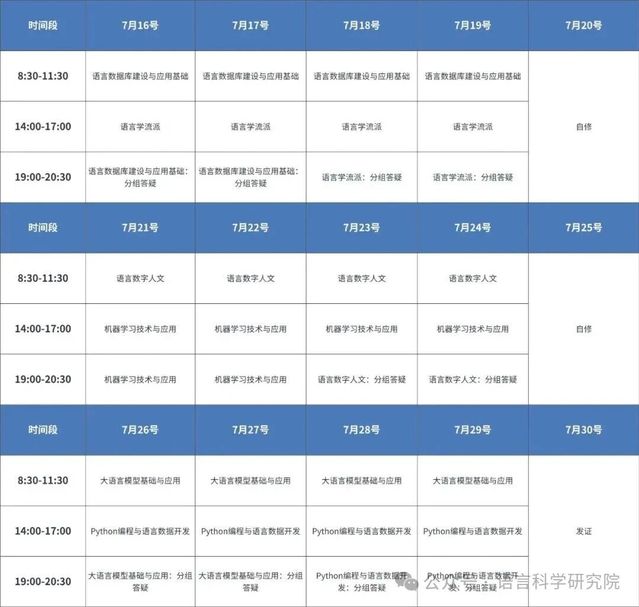
Training Period: July 16–30, 2026
Training Format: Offline (Lecture Hall 136, Building 5, Songjiang Campus, Shanghai International Studies University) + Online (Tencent Meeting)
Registration Method: Online payment
Registration Period: May 1 – July 29, 2026
Fee Structure:
Offline:
RMB 15,000/person
Group registration of 5 or more: RMB 12,000/person
Lunch will be provided during the offline training period.
Online:
RMB 12,000/person
Group registration of 5 or more: RMB 9,000/person
2. Registration and Payment
1 Online Payment
Individual QR code registration: Please ensure accurate completion of personal and payment information (all information must be correct, as it cannot be modified later).
[QR Code for Workshop on Methods and Practice in Linguistic Science Research Registration and Payment]

[QR Code for Micro-major in Language Data Science Registration and Payment]

Participants should enter the corresponding fee amount based on the workshop type and indicate the workshop name in the Remarks field.
2 Remittance Registration
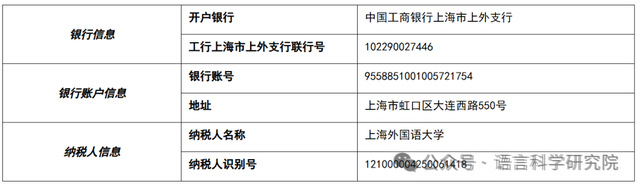
Group/Remittance Registration: Please contact Ms. Zhang via WeChat (18061256876) to confirm group/remittance registration information before registering. The payment method for group/remittance registration is bank transfer. Please indicate in the transfer remarks: Institution + Number of Participants (individual registrants should provide full name) + Workshop Type. The remittance account details are as follows:
[Important Notes]
For group registration, the responsible teacher should contact Ms. Zhang via WeChat (18061256876) in advance to submit relevant group registration information. (Institutional registration will receive additional discounts.)
Before the commencement of the workshop sessions, participants who are unable to continue their studies due to personal reasons may withdraw and receive a refund. After the official start of the workshop sessions, participants who are unable to continue will be deemed to have voluntarily withdrawn from the program, and no refund will be issued.
As SISU faculty and students cannot have invoices issued by their own institution, if reimbursement is required, please contact Ms. Zhang to confirm the specific registration and payment method.
After successful registration, please add Ms. Zhang on WeChat (18061256876) to be invited to the group. Please indicate your full name and the workshop you have registered for in the friend request.
3. Registration Deadline
Registration Period for the Workshop on Methods and Practice in Linguistic Science Research:
May 1 – July 13, 2026
Registration Period for the Workshop on the Micro-major in Language Data Science:
May 1 – July 29, 2026
4. Important Reminders
This workshop series is offered as a combined offline and online training program. The online platform will be Tencent Meeting. Participants are requested to download the Tencent Meeting application on both mobile and computer devices in advance and register as users.
During the workshop period, invoicing services and training services will be provided by Shanghai International Studies University (invoices will be issued uniformly by the Finance Office after the conclusion of all workshops).
Certificates of completion will be stamped by the organizing institution.
Nearby hotels include Jinfeng International Hotel, Kaiyuan Mingdu Hotel, Wan Yi Hotel, and Quanji Hotel, among others. If you wish to apply for accommodation at the SISU International Education Center Apartments, please contact Ms. Zhang (18061256876) in advance to complete the on-campus application. (Rooms at the International Education Center are limited and available on a first-come, first-served basis.)
5. Contact Information
Ms. Zhang, Institute of Language Sciences, Shanghai International Studies University
Tel: 18061256876
6. Expert Faculty
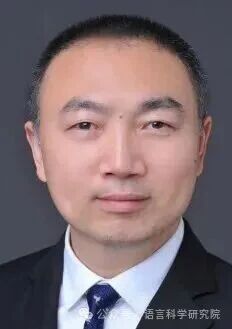
Lei Lei, Ph.D., Professor and Doctoral Supervisor at the Institute of Language Sciences, Shanghai International Studies University. Research interests include corpus linguistics, digital humanities in language, academic English, and quantitative language studies. He has published multiple monographs with Cambridge University Press, TESOL Press, and Science Press. He has published nearly 40 research articles in SSCI journals such as Applied Linguistics, Language Teaching, International Journal of Corpus Linguistics, and System, as well as over 10 book reviews, with two articles selected as ESI Highly Cited Papers. He has also published more than 10 articles or book reviews in CSSCI journals such as Modern Foreign Languages, Foreign Language Teaching, and Journal of PLA University of Foreign Languages. He has led and completed multiple research projects, including those funded by the National Social Science Fund. He serves on the editorial boards of several domestic and international journals, including Journal of English for Academic Purposes (SSCI).
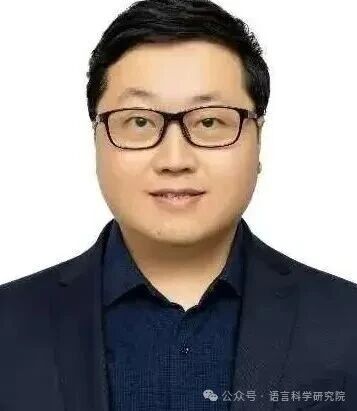
Jiang Xiaoming, Professor and Doctoral Supervisor at the Institute of Language Sciences, Shanghai International Studies University, primarily engaged in scientific research and talent cultivation in psycholinguistics and neurolinguistics. Elsevier Highly Cited Chinese Researcher in Foreign Languages and Literature. Council Member of the Neurolinguistics Research Branch of the Chinese Language Modernization Society, Committee Member of the Language Psychology Professional Committee of the Chinese Psychological Society, and Editorial Board Member of Psychological Science. His research achievements have been recognized by the International Speech Communication Association (ISCA) and the European Association for Signal Processing (EURASIP) with the Speech Communication Best Paper Award. He has led projects funded by the National Natural Science Foundation of China (General Program), the Shanghai Natural Science Foundation (General Program), the National Language Commission, the Shanghai Philosophy and Social Science Planning Project, and the Ministry of Education's Industry-Academia Cooperation Collaborative Education Program, and has participated in two major National Social Science Fund projects. He has published articles in journals such as Trends in Cognitive Sciences, Behavior Research Methods, and JASA. His course Psycholinguistics has been selected as a Shanghai First-Class Undergraduate Course. His research employs behavioral, neurophysiological (EEG), neuroimaging, and large language model approaches to investigate multimodal encoding and decoding of voice and vocal expressions in verbal communication and interaction among healthy and clinical populations, verbal information processing of cultural and social emotions, and cognitive computations in language activities and their applications.

Li Jingjie, Professor at the Institute of Language Sciences, Shanghai International Studies University. Research interests primarily include corpus linguistics, quantitative linguistics, and academic English studies. She received her Ph.D. in Foreign Linguistics and Applied Linguistics from Shanghai Jiao Tong University and conducted postdoctoral research at the Center for Information and Language Systems Research at the University of Liverpool, UK. She has been granted one national invention patent and has published nearly 20 research articles in SSCI and CSSCI journals including International Journal of Corpus Linguistics, Foreign Language Teaching and Research, Foreign Languages, Computer-Assisted Foreign Language Education in China, and Foreign Languages and Their Teaching. She has led multiple research projects, including those funded by the National Social Science Fund and the Shanghai Social Science Fund.

Li Yan, Associate Professor and Master's Supervisor at the Institute of Language Sciences. She currently teaches core courses including Machine Learning Technologies and Applications, Knowledge Graphs, Python Programming and Data Analysis, Advanced Mathematics, and Linear Algebra. She has led vertical research projects including the National Natural Science Foundation of China, sub-projects of major National Social Science Fund projects, the Shanghai University Outstanding Young Teachers Special Fund, and SISU校级 research projects. She has also received horizontal research projects from the Shanghai Development and Reform Commission, Shanghai Yuankai Group, and China State Shipbuilding Corporation. Her honors include international paper awards, national-level outstanding case awards, Shanghai Industry-Education Integration Outstanding Supervisor, Professional Core Teacher, and SISU March 8th Red-Banner Pacesetter.
Xu Hongzhi, Ph.D., Assistant Researcher, full-time researcher at the Key Laboratory of Language Sciences and Multilingual Intelligence Applications and the Institute of Language Sciences, Shanghai International Studies University, and Zhiyuan Young Scholar. Research interests include computational linguistics, formal semantics and pragmatic theory and computation, and cross-linguistic morphological analysis and computation.

Ni Qin, Professor and Master's Supervisor at the Institute of Language Sciences, Shanghai International Studies University, and Shanghai Youth Rising-Star Talent in Science and Technology. She holds a Ph.D. in Computer Science and Technology from the Polytechnic University of Madrid, Spain, and serves as an international expert member of the UNESCO Education AI and ICT in Education Unit. She has participated as a drafter in the development and publication of UNESCO official documents including the Global Guidelines on Generative AI in Education and Research and the Global Framework for AI Competencies for Teachers. As project leader, she has directed multiple research projects including the National Natural Science Foundation of China, the Shanghai Natural Science Foundation, UNESCO commissioned consultancy projects, the Shanghai AI Technology Support Special Program (main project), and the Shanghai Natural Science Foundation General Program. Her research findings have been published in leading AI journals and conferences such as IEEE Transactions on Learning Technologies, ACM Transactions on Intelligent Systems and Technology, IEEE Transactions on Artificial Intelligence, and AAAI.
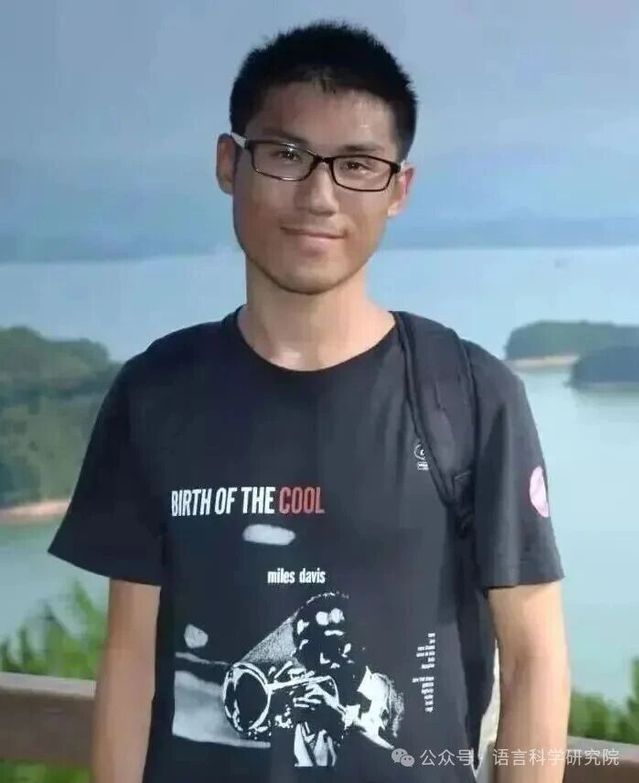
Zhang Wenshuo, Assistant Researcher at the Institute of Language Sciences, Shanghai International Studies University. She graduated from the School of Psychological and Cognitive Sciences at Peking University in 2020 with a Ph.D. in Science. Her research interests focus on the cognitive processes underlying human linguistic communication, with particular attention to pragmatic reasoning, human-machine conversation, and action acquisition. She employs eye-tracking, physiological measurements, EEG, and fMRI to investigate the behavioral and neural bases of cognition. She has published multiple papers in SCI/SSCI journals including NeuroImage, Cerebral Cortex, Neuropsychologia, Psychophysiology, and Language, Cognition and Neuroscience. Her current research project, funded by the Shanghai Philosophy and Social Science General Program, focuses on the synergistic roles of the brain's motor network and theory of mind network in the comprehension of speech acts. In teaching, she offers courses including Statistics, R Statistical Language, and Cognitive Neuroscience Techniques, and participates in the teaching of the National First-Class Undergraduate Course Interdisciplinary Research Methods in Language. Students interested in psycholinguistics/neurolinguistics are welcome to join her research group (graduate admissions available in the Psycholinguistics/Language Data Science direction at the Institute of Language Sciences, SISU).

Li Xiaoqian, Assistant Researcher at the Institute of Language Sciences, Shanghai International Studies University. She holds a Ph.D. in Foreign Languages and Literature from Shanghai Jiao Tong University. Her research areas include corpus-based translation studies, diplomatic discourse studies, and image studies. She has led one National Social Science Fund Youth Project and one China Postdoctoral Science Foundation General Grant project.
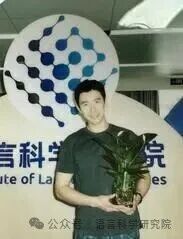
Fu Yang, Assistant Researcher at the Institute of Language Sciences, Shanghai International Studies University. He completed his postdoctoral research in Linguistics and Applied Linguistics at Zhejiang University and holds a Ph.D. from the Instituto Universitario de Neurociencia (IUNE). He is a recipient of the Spanish Ayudas Margarita Salas Para La Formación de Jóvenes Doctores National Young Scholar award. He has published SSCI papers in journals including Brain and Language, Studies in Second Language Acquisition, and Bilingualism: Language and Cognition. He has led projects including the Spanish Ministry of Science and Innovation Innovation Project, the Shanghai Magnolia-Pujiang Talent Program, and the China Postdoctoral Science Foundation Project. His research interests include psycholinguistics, neurolinguistics, hyperscanning, and combined EEG recordings.