Lecture by Fabio De Leonardis
Speaker Biography
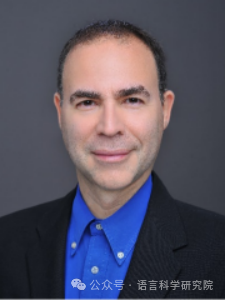
Fabio De Leonardis holds a BA+MA in Foreign Languages and Literatures (English, Russian, French) and a PhD in Theory of Language and Sciences of Signs from the University of Bari (Italy), as well as an MA in Russian and Eurasian Studies from the European University at St. Petersburg (Russia). In the spring of 2014, he was a Wayne Vucinich Fellow at the Center for Russian, East European and Eurasian Studies at Stanford University (USA). His research interests can be grouped around three axes: one is political discourse analysis; the second is the symbolic realm of nationalism, especially in its interaction with post-colonial contexts, literature and the arts in general; the third is Russian and Eurasian studies. He is a member of the editorial staff of the online scientific journal Nazioni e regioni. Studi e ricerche sulla comunità immaginata [Nations and Regions. Studies and Researches on Imagined Community], which he co-founded in 2012 and co-edited until December 2021. Besides research, he has also carried out intensive translation work. His most recent publications include Nation-building and Personality Cult in Turkmenistan: The Türkmenbaşy Phenomenon, New York-Abingdon, Routledge, 2018; “Memory and Nation-Building in Georgia,” in Rico Isaacs – Abel Polese (eds.), Nation-Building and Identity in the Post-Soviet Space. New Tools and Approaches, New York-Abingdon, Routledge, 2016, pp. 25-38.
Lecture Time & Venue
Lecture Time: June 14 (Sunday), 14:00 – 15:00
Lecture Venue: Lecture Hall 136, Teaching Building No. 5, Songjiang Campus
Lecture Title
From Godly Balm to Healthy Fat: Heritagizing Extra Virgin Olive Oil through Packaging in Apulia
Lecture Abstract
In this lecture I am first going to show how extra virgin olive oil, from being one of the staples of the foodways of several Mediterranean peoples, ended up in disgrace in the early XX century, but came to be re-valorized in the second half of the same century by a medico-scientific discourse that framed it as a healthy fat and by a cultural discourse that associated it to a mythologized view of the Mediterranean. Subsequently, I am going to argue that in Apulia, an Italian region that is the country's largest oil producer, olive oil is being heritagized by establishing a close connection to a certain territory and its 'traditional' way of production, which are implicitly valorized as markers of high quality and as signs of distinction for consumers. Using as a case study a multimodal analysis of the packaging of two oil-producing companies, I will show that such valorization is inscribed within a food discourse that sees extra-virgin olive oil as a key component of a healthy diet and the consumption of terroir-produced foodstuff as a way to achieve health. I will also argue that this discourse in turn aligns with the neoliberal view which sees health not as dependent on social factors, but as the outcome of individual choices, and that the heritagization of olive oil is part of a wider ongoing process of heritagization of Apulian food.
Lecture by Muhammad Afzaal
Speaker Biography
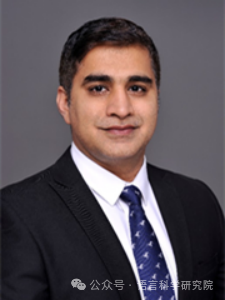
Dr. Muhammad Afzaal joined the Institute of Corpus Studies and Applications, Shanghai International Studies University, China after gaining his PhD at Shanghai Jiao Tong University, China, and extensive research fellow experience at the Hong Kong Polytechnic University, Hong Kong, and seven years of teaching experience at Foundation University Islamabad, Pakistan. His PhD research includes a corpus-based analysis of discourses on the Belt and Road Initiative. He received the Yang Yong Research Award from Shanghai Jiao Tong University's Graduate School. Afzaal's research interests include topics in the areas of corpus linguistics, discourse analysis, critical discourse analysis, translation studies, and, more particularly, the merging of language sciences with NLP and big data.
Lecture Time & Venue
Lecture Time: June 14 (Sunday), 15:00 – 16:00
Lecture Venue: Lecture Hall 136, Teaching Building No. 5, Songjiang Campus
Lecture Title
A Systematic Evaluation of Large Language Models in Chinese–English Political-Historical Discourse Translation: Quality, Performance, and Limitations
Lecture Abstract
Despite the remarkable performance of large language models (LLMs) in machine translation, systematic evaluation of their translation quality remains limited, especially for newly released models such as ChatGPT-5.5 in comparison with earlier versions such as ChatGPT-3.5 and GPT-4.0. Human-based translation evaluation is often time-consuming and difficult to scale, while automatic metrics may not fully capture the quality of LLM-generated translations, particularly in specialized genres such as political-historical discourse. To address this gap, the present study evaluates the Chinese–English translation performance of three LLMs using a corpus of approximately 1.9 million text units, consisting of one Chinese source text and three English target texts generated by GPT-3.5, GPT-4.0, and GPT-5.5, respectively. The results show that GPT-3.5 performs best on reference-based overlap metrics, including BLEU, chrF, and TER, indicating that its translation is closest to the reference text at the surface level. GPT-4.0 demonstrates a more balanced performance between fidelity and naturalness. By contrast, GPT-5.5 performs better in target-language quality, especially in average sentence length, Flesch-Kincaid readability, lexical diversity, and discourse organization, suggesting stronger fluency and readability. Overall, traditional automatic metrics tend to favor conservative translations that closely follow the reference text, while potentially underestimating more extensively rewritten but more natural LLM outputs. This study highlights both the strengths and limitations of existing LLMs in Chinese–English machine translation and points to the need for multi-dimensional evaluation frameworks. The findings should be interpreted with caution, given the potential risk of training-data contamination in LLM-based studies.