Lecture by Dr. Jiuzhou Hao
Speaker Biography

Dr. Hao is a developmental psycho-/neuro-linguist. He is currently a Research Associate in the School of Philosophy, Psychology and Language Sciences at the University of Edinburgh, funded by the Leverhulme Trust, where he also received his PhD. He previously held postdoctoral positions at UiT The Arctic University of Norway, including a Marie Skłodowska-Curie Postdoctoral Fellowship. His research examines language development and processing in monolingual and bilingual children and adults, with and without neurodevelopmental disorders, focusing on how individual differences and language experience shape linguistic behaviour, cognition, and neural processing. His work has appeared in journals including Journal of Child Language, Studies in Second Language Acquisition, Bilingualism: Language and Cognition, Second Language Research, and others.
Personal Homepage: https://edwebprofiles.ed.ac.uk/profile/j-hao
Lecture Time & Venue
Lecture Time: May 12 (Tuesday), 13:00 – 14:00
Lecture Venue: Lecture Hall 136, Teaching Building No. 5, Songjiang Campus
Lecture Title
Cross-linguistic influence in child heritage bilingualism: Word order and case marking in heritage Greek, Japanese and Mandarin
Lecture Abstract
Child heritage speakers’ (CHSs’) constant use of the societal dominant language may influence the development and use of their heritage language, an effect commonly referred to as cross-linguistic influence (CLI). Yet both the mechanisms that give rise to CLI and the nature of this influence remain insufficiently understood. Several key questions remain open: Does CLI affect underlying grammatical representations, or is it better characterised as a by-product of language co-activation and processing? Does it lead to qualitative, rather than quantitative, differences between monolinguals and bilinguals? And to what extent do linguistic models of CLI account for variation in bilingual data beyond what can be explained by child-level factors?
In this talk, I show that increased methodological granularity, developmentally appropriate comparisons, and the incorporation of individual differences can contribute to a more informative account of CLI, and help address these open questions. Drawing on experimental studies of Greek, Japanese, and Mandarin CHSs across diverse sociolinguistic contexts and task modalities (e.g., comprehension, production, and processing), I focus on word order and case marking as domains to demonstrate how patterns of CLI emerge from the interaction between bilingual experience and the structural properties of the heritage and societal languages.
Lecture by Dr. Jia'en Yee
Speaker Biography
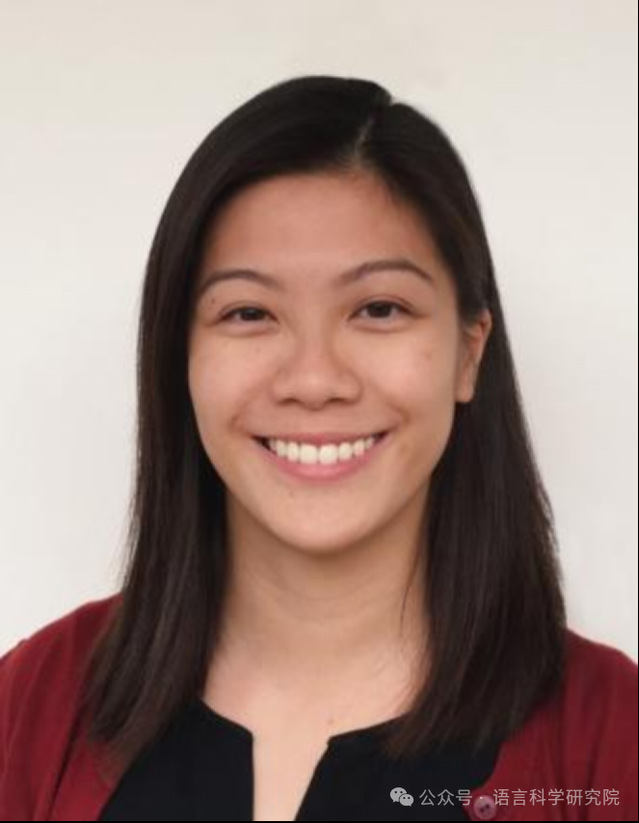
Dr. Yee is a Marie Skłodowska-Curie Actions Postdoctoral Fellow in the School of Social Sciences, Lancaster University. Her research interests lie at the intersection of psychology, neuroscience and linguistics, where she uses behavioural and neuroimaging approaches to examine how bi-/multilingual experience relates to neurocognitive outcomes. She has also conducted research in education, including work on digital literacies and generative AI.
Personal Homepage: https://www.lancaster.ac.uk/social-sciences/people/jiaen-yee
Lecture Time & Venue
Lecture Time: May 12 (Tuesday), 14:00 – 15:00
Lecture Venue: Lecture Hall 136, Teaching Building No. 5, Songjiang Campus
Lecture Title
Multilingual engagement at the individual level and its role in predicting neurocognitive adaptations across the lifespan: Recent and ongoing work from our lab
Lecture Abstract
Research on bilingualism has long examined whether managing multiple languages induces adaptations in cognition and in the neural mechanisms supporting it. Traditionally, this work has relied on dichotomous comparisons between monolinguals and bilinguals, despite growing recognition that language experience varies substantially across individuals. In this talk, I will discuss recent developments in neurolinguistics research that increasingly focus on individual differences in multilingual engagement as a way of capturing the diversity of language experience. I will present recent findings from our lab examining how varying degrees of multilingual engagement are differentially associated with specific cognitive and neural adaptations. Finally, I will introduce ongoing and upcoming projects involving populations across the lifespan, and invite discussion and suggestions from the audience.