Speaker Biography
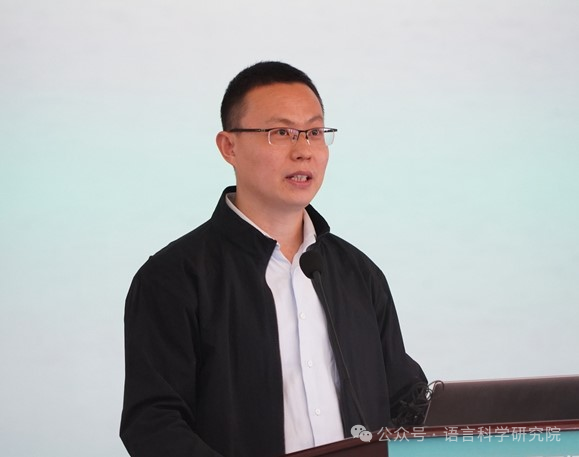
Wang Chunhui is a Professor at the College of International Culture, Capital Normal University, where he serves as Director of the College Academic Committee and Director of the Language Governance Research Center. He is a doctoral supervisor, Deputy Editor-in-Chief of the journal Chinese Journal of Language Policy and Planning, Editor-in-Chief of the Journal of Language Governance, Executive Editor-in-Chief of the “Language Governance and State Governance Research Series,” and a member of the editorial boards of several academic journals. He is a member of the Expert Committee of the National Emergency Language Service Corps, a member of the Expert Committee of the China Rural Development and Volunteer Service Promotion Association, a board member of the International Society for Chinese Language Teaching, an Executive Board Member of the Language Policy and Planning Committee of the Chinese Language Society, an Executive Board Member of the Sociolinguistics Committee of the Chinese Language Society, and Vice Chair of the Language Governance Research Branch of the Chinese Association for the Modernization of the Chinese Language. He has led over ten research projects, including key projects of the National Social Science Fund of China, major projects of the Ministry of Education and the National Language Commission, and major projects of the Center for Language Education and Cooperation. He has published three books and over 130 articles, nearly 20 of which have been reprinted by Xinhua Digest and other publications. His research interests include language governance and state governance, language and cultural education and communication, sociolinguistics, and Chinese syntax and semantics.
Lecture Time & Venue
Time: April 27, 2026 (Monday), 13:00
Venue: Lecture Hall 136, Teaching Building No. 5
Lecture Title
On the “Fifth Paradigm” of Language Research in the Age of Artificial Intelligence
Lecture Abstract
Scientific research has undergone the experimental paradigm, the theoretical paradigm, the computational paradigm, and the data-intensive paradigm, and is now moving toward the fifth paradigm: AI-driven scientific discovery, in which artificial intelligence is not merely an auxiliary tool but also a collaborator and inspirer in knowledge production. Due to the unique nature of its object of study, language research is at the forefront of this transformation. The fifth paradigm of language research is, in essence, a systemic restructuring of language research through a “human-AI collaborative generation mechanism.” In terms of knowledge production, this is reflected in four fundamental shifts: the cognitive subject is restructured from human researcher to human-AI composite cognitive system; the generation mechanism shifts from an explanatory model to a generative mechanism; the production structure shifts from a linear process to a circular system; and the presentational form shifts from rule-based to distributed, parameterized probabilistic representation. In terms of research practice, this is reflected in five transformations: the research object expands from human language to human-machine hybrid language; research methods adopt AI not only as the object of analysis but also as a methodological tool for generating data, simulating experiments, and assisting analysis; research goals expand beyond understanding human language to building language agents capable of generating, understanding, and interacting; the research subject is upgraded from individual scholar to human-machine collaboration; and the disciplinary structure moves from a single discipline toward multidisciplinary integration. This transformation brings significant opportunities for language research, including a leap in research capacity and the expansion of theoretical innovation space, while also giving rise to deep challenges such as an interpretive crisis, theoretical weakening, concentration of knowledge power, language ecological risks, and ethical issues. Facing the systemic restructuring of the fifth paradigm, language researchers should not merely be followers of methodology, but rather should become critical thinkers of technology governance and constructors of language ethics, maintaining human agency and safeguarding ultimate human authority.