To promote learning and research in sign language linguistics and related fields, the Institute of Language Sciences at Shanghai International Studies University is organizing a series of events featuring expert lectures, teaching and research case presentations, and hands-on practice. The series will systematically introduce fundamental concepts in sign language corpus linguistics, present common sign language corpus resources and the core functions of corpus tools, and, through examples of teaching applications and research cases, share ideas for applying sign language corpora in foreign language teaching and research. The goal is to help university faculty, students, and sign language enthusiasts gain a solid understanding of sign language basics, become familiar with fundamental paradigms in sign language linguistics, and engage with sign language research.
The Institute plans to host the “Sign Language Linguistics Research and Practice Series” in an in-person format. Please refer to the Institute’s official website and WeChat public account for specific scheduling.
This series consists of a 5-day program divided into a Sign Language Intensive Learning Course (October 18–19, 2025) and a Sign Language Research and Application Course (October 25–26 and November 1, 2025). The Sign Language Intensive Learning Course is designed for beginners or those with no prior knowledge of sign language, enabling participants to strengthen their sign language skills over just two days to achieve basic communication proficiency. The Sign Language Research and Application Course covers various branches of sign language linguistics—phonetics, phonology, lexicon, syntax, pragmatics, and corpus linguistics—through expert lectures, guided research demonstrations, presentations, and hands-on practice, allowing participants to gain a practical understanding of sign language research methods and analytical techniques.
Urgent Call: Sign Language Elite Training Program
Why Us: Researching Sign Language, A Promising Future
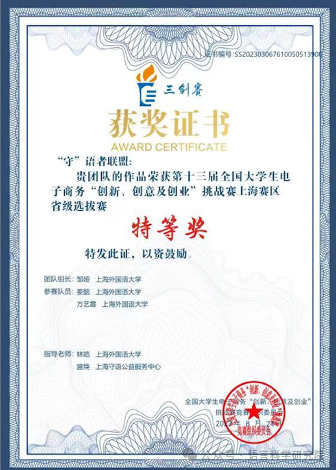
The SISU Sign Language Team was established when Dr. Lin Hao joined SISU in 2016. With the support of the Institute, the team has developed rapidly in just a few years. In terms of talent cultivation, the team began recruiting master’s and doctoral students in 2019, having since enrolled three doctoral students and twelve master’s students. To date, one doctoral student and seven master’s students have graduated. Due to the critical shortage of Chinese sign language research talent, our graduates are in high demand, with all securing high-quality employment or further studies. Two master’s graduates have received full scholarships to pursue further studies abroad, at the University of Pennsylvania and the University of British Columbia, respectively. Among our employed graduates, Xiao Ailing (class of 2022) now works at a renowned international sign language translation company, becoming China’s first international sign language interpreter! Even undergraduate students involved in our research have greatly benefited. Our sign language project won the Grand Prize at the 2023 National College Student Innovation and Entrepreneurship Competition. Among the core team members, one was admitted to Peking University for graduate studies, another became a professional sign language interpreter beloved by the Deaf community, and another pursued further studies in Hong Kong.
Why Us: Rooted in China, Global Perspective
The SISU Sign Language Team is dedicated to rigorous research, integrating sign language studies with various research fields and conducting extensive interdisciplinary and international research. Our collaborators include research teams from Harvard University, the University of Washington, University College London, the University of Essex, the University of Amsterdam, École Normale Supérieure in Paris, and the Chinese University of Hong Kong. Supported by a strong academic atmosphere, state-of-the-art experimental equipment, and robust sign language resources, the team has achieved notable success in research talent cultivation. For example, this year’s master’s graduate, Zou Yue, published several papers in English-language core journals within a single year.
However, compared to the increasingly high linguistic status of sign languages internationally, the flourishing development of sign language research, and the surge in sign language professionals worldwide, we deeply feel the acute shortage of sign language research talent in China. The current state of Chinese sign language research lags far behind China’s globally leading economic and scientific research capabilities. The status of sign language in China remains very low, and public awareness of sign language and the issues facing the Deaf community still lacks substantive understanding.
Therefore, driven by this motivation and with the sincere care and guidance of the Institute’s leadership, we have decided to launch sign language research training programs to contribute to the cultivation of sign language research talent in China! We are fully committed to making this inaugural sign language workshop a success. To this end, we will adhere to the following principles:
1. In-person only: Because sign language requires face-to-face interaction, and learning sign language research requires hands-on guidance!
2. Small class sizes: We will limit the class size to 15 participants, accepting no more!
3. Limited sign language skills? No need to worry: We have invited top domestic Deaf expert teams to deliver intensive instruction!
4. Integration of theory and practice: We will not only teach but also allow participants to experience the thrill of scientific discovery through demonstrations, personalized instruction, and case studies.
5. Personalized research mentoring: We will provide targeted research mentoring based on each participant’s academic background, helping with topic selection and research design.
Our Current Research Interests (We warmly welcome participants to help us explore new areas!):
- Sign Language Linguistic Research: Phonetics, phonology, morphology, syntax, pragmatics, and discourse analysis of sign language from various theoretical perspectives.
- Sociolinguistic Studies of Sign Language: Language variation, language evolution, language policy, and language landscape.
- Sign Language Translation Studies: Cross-modal issues in sign language translation, sign language poetry translation, etc.
- Psycholinguistic Studies of Sign Language: Sign language lexical processing, cognitive mechanisms in sign language, etc.
- Sign Language Learning and Acquisition: Sign language as a second language, classroom learning, written language studies of Deaf individuals, etc.
- Sign Language and the Arts: Sign language poetry, sign language theater, sign language film, etc.
What will you gain after completing the course?
- A new network in the field of sign language + research!
- A completely new perspective!
- Under equal conditions, our team’s graduate student spots will be prioritized for our trainees.
- If you need to pursue further graduate studies, we will recommend outstanding participants to our international collaborators.
- We will open our resources to our trainees, including sign language survey data and sign language corpora, providing robust academic support for your research.
- We will select outstanding participants and projects to collaborate on sign language research.
- We will provide sign language internship opportunities, such as translation opportunities and opportunities to interact with the Deaf community.
Still struggling to find a research direction?
Still worried about being unable to break through in publishing?
Want to explore a new research field?
Or simply want to train your hands to be agile, your eyes sharp, and your mind wise?
Come! Don’t miss this opportunity! If you miss it, you may have to wait two years (due to core team members going abroad) or even longer!
Register quickly! Only 15 spots available!!!
01 Course Schedule
| Date | 8:00–11:00 | 13:00–15:30 | 16:00–18:00 |
|----------|----------------|-----------------|-----------------|
| 2025-10-18 | Sign Language in Ten Days – Units 1–2 | Sign Language in Ten Days – Units 3–4 | Sign Language in Ten Days – Units 5–6 |
| 2025-10-19 | Sign Language in Ten Days – Units 7–8 | Sign Language in Ten Days – Units 9–10 | Class Summary & Certificate Presentation |
| 2025-10-25 | Sign Language Phonetics and Phonology | Sign Language Morphology and Syntax | Sign Language Semantics and Pragmatics |
| 2025-10-26 | Research Questions & Methods in Sign Language Studies | Sign Language and Data: Data Collection, Annotation, and Analysis Practice | Introduction to Sociolinguistic Studies of Sign Language: Policy, Ethics, Culture |
| 2025-11-01 | Introduction to Applied Sign Language Research: Translation, Education, and Artificial Intelligence | Introduction to Psycholinguistic Studies of Sign Language & Research Case Analysis | Class Summary & Certificate Presentation |
02 Check-in Time & Location
Check-in Times:
1. Sign Language Intensive Learning Course: October 18, 2025 (7:30–8:00)
2. Sign Language Research and Application Course: October 25, 2025 (7:30–8:00)
Check-in & Venue: SISU Songjiang Campus, Building 5, Room 136
Registration Period:
1. Sign Language Intensive Learning Course: From now until October 18, 2025
2. Sign Language Research and Application Course: From now until October 25, 2025
03 Registration Fees
- Sign Language Intensive Learning Course: 1,000 RMB/person
- Sign Language Research and Application Course: 2,600 RMB/person
- Group registration (5+ participants): 10% discount (not combinable with student discount)
- Students: 20% discount (valid student ID required)
Registration Instructions:
After registration and payment, please contact Ms. Zhang via WeChat (WeChat ID: 18061256876) to be added to the course group.
For further details about the course content, please contact Ms. Wang via WeChat (WeChat ID: w1183274821).
- For group registration, please contact Ms. Zhang at 18061256876.
- Participants may withdraw and request a refund before the start of the training program. After the program begins, withdrawals will be considered as voluntary abandonment, and no refunds will be issued.
04 Registration Method
1. Individual Registration: Scan the QR code to register. Please ensure accurate submission of personal and payment information. (All information must be entered correctly, as it cannot be modified later.)

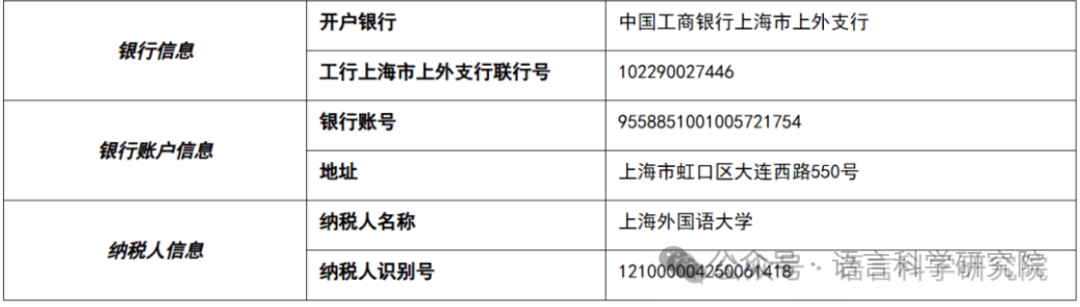
2. Group / Bank Transfer Registration: Before registering, please contact Ms. Zhang via WeChat (18061256876) to confirm group/bank transfer registration details. Payment for group or bank transfer registration should be made via bank transfer, with “Institution + Number of Participants” noted in the transfer remarks. (Individual registrants should use their full name.) Bank account details are as follows:
05 Contact Information
Institute of Language Sciences, Shanghai International Studies University
Ms. Zhang: 18061256876
06 Important Notes
- This training series will be conducted in-person.
- During the training period, Shanghai International Studies University will provide invoicing services and training support. Invoices will be issued under the category “Training Fees.”
- A certificate of completion will be issued by the organizer, bearing the official seal.
- For in-person participants, accommodation and meals are self-arranged.
07 Instructor Team
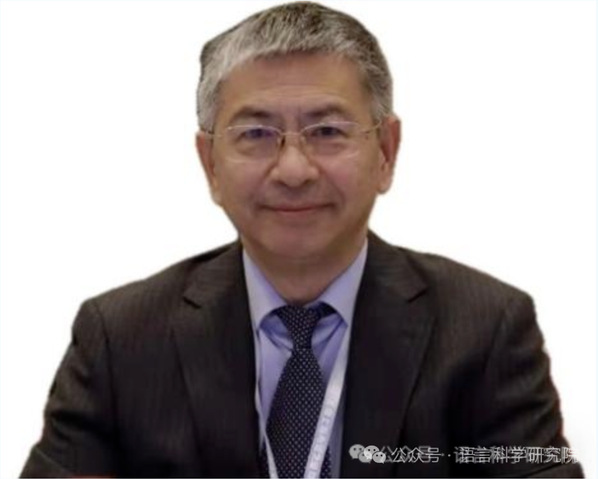
Zhang Jisheng holds a Ph.D. in Linguistics from Leiden University, the Netherlands, and is a Professor in the Department of English, School of Foreign Languages, East China Normal University. His research interests include generative phonology, Chinese phonology, and sign language phonology. He has published over 60 papers in domestic and international academic journals such as Lingua, Journal of Chinese Linguistics, Studies of the Chinese Language, Contemporary Linguistics, Journal of Foreign Languages, and Language Sciences. His representative works include Shaoxing Phonology (2006) and Shanghai Sign Language Phonology (2019). He contributed the entry “Chinese Syllable Structure” to the Oxford University Press’s Encyclopedia of Linguistics. He has received the Ministry of Education’s Award for Outstanding Research Achievement in Higher Education (Humanities and Social Sciences) and five Shanghai Philosophy and Social Sciences Outstanding Achievement Awards.
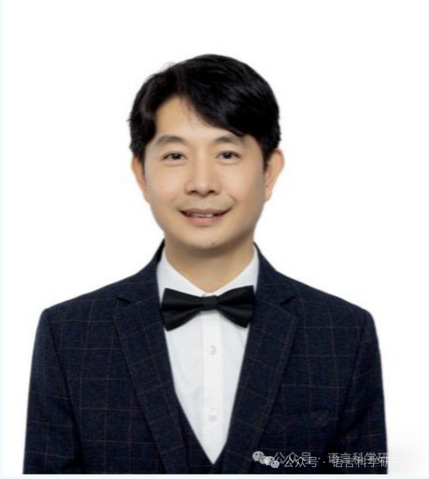
Lin Hao is an Associate Research Fellow at the Institute of Language Sciences, Shanghai International Studies University (since 2023). He holds a Ph.D. in Applied Linguistics from Fudan University (2011–2016), with a research focus on sign language linguistics. He was a Visiting Scholar and Research Assistant in the Department of Linguistics and Psychology at Harvard University (2021–2023). His research is dedicated to sign language studies.
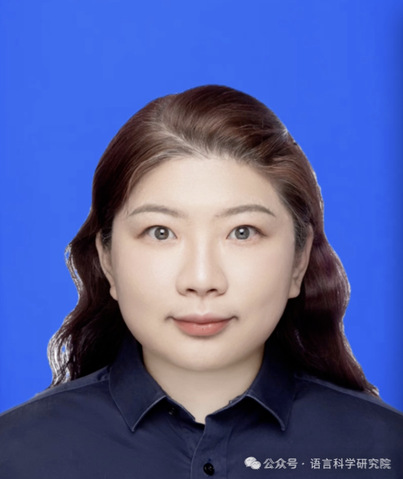
Ni Yingjie comes from a deaf family and is proficient in Chinese Sign Language and Chinese. He serves as the Director of Sign Language Instruction at Accessible Sign Language (Guangzhou) Service Co., Ltd., a Distinguished Researcher at the China Sign Language and Braille Promotion Center, and a Distinguished Sign Language Expert at Shanghai International Studies University. He is the second chief editor of the sign language textbooks Sign Language in Ten Days and Sign Language in Ten Weeks. He directed the accessible integration drama Paper Crane. He has many years of experience in sign language teaching, accessible arts instruction, and accessible integration work.

Li Liangliang is a Lecturer in the Department of Foreign Languages and Cultures at North Sichuan Medical College and holds a Ph.D. in Foreign Linguistics and Applied Linguistics from Shanghai International Studies University. Her main research interests lie in sign language linguistics and psycholinguistics/neurolinguistics. She employs techniques such as EEG and functional magnetic resonance imaging (fMRI) to investigate the cognitive processes and neural substrates underlying phonetic, semantic, and morphological processing of sign language vocabulary.
Workshop Survey
If you are interested in this workshop, please participate in our survey. We will carefully consider your feedback and use it to optimize our training content and arrangements.
Survey link: https://www.wjx.cn/vm/eS0aEtp.aspx