In 2025, the Institute of Language Sciences secured three new research projects at or above the provincial/ministerial level, including two projects funded by the National Social Science Fund of China and one project funded by the Shanghai Philosophy and Social Science Planning Program announced recently. With these additions, the total number of active provincial/ministerial-level and above research projects at our institute has reached 36, averaging 1.13 projects per researcher.
Development and Research of an Intelligent Difficulty Evaluation System for Classical Chinese Texts
(General Project of the National Social Science Fund of China)
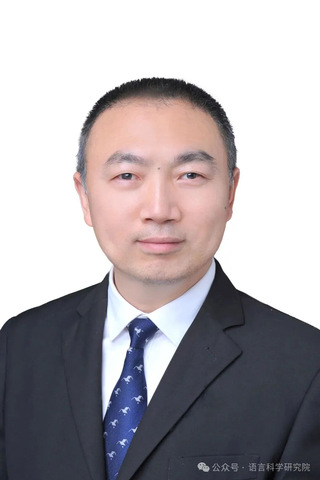
Lei Lei
Ph.D., Professor, Doctoral Supervisor, Shanghai International Studies University. His research interests include corpus-based and quantitative studies of lexical and syntactic description and diachronic change in modern Chinese, classical Chinese, and English, learner language, and digital humanities in language studies. He has published five monographs with Cambridge University Press and other publishers. He has published over 50 research articles and over ten book reviews in SSCI-indexed journals such as Applied Linguistics, Journal of Second Language Writing, System, Language Teaching, and Corpus Linguistics and Linguistic Theory, with two articles selected as ESI Highly Cited Papers. He has also published over ten articles and book reviews in CSSCI-indexed journals. He has led two projects funded by the National Social Science Fund of China. He serves as an editorial board member for journals including Journal of English for Academic Purposes (SSCI) and as Associate Editor of Corpus-based Studies across Humanities (De Gruyter). He has been recognized as a Highly Cited Chinese Researcher by Elsevier.
Project Description: Addressing current issues such as the lack of a comprehensive evaluation standard system and the absence of scientifically grounded level classification tools for classical Chinese texts, this project aims to develop an intelligent evaluation system to promote the digital transformation of classical Chinese teaching and research. Leveraging artificial intelligence and natural language processing technologies, the project will develop an intelligent system for evaluating the difficulty of classical Chinese texts, encompassing theoretical framework construction, system development, and practical application. The research will support the selection and optimization of classical Chinese learning resources and serve multiple application scenarios, including teaching, textbook and extracurricular reading material compilation, language proficiency testing, and linguistic research.
A Study of Chinese Counter-Expectation Markers Based on the RoBERTa Language Model
(Youth Project of the National Social Science Fund of China)

Jiang Yining
Postdoctoral Fellow, Institute of Language Sciences, Shanghai International Studies University. Her research interests include lexical semantics, pragmatics, discourse analysis, and historical linguistics. She has published numerous papers in CSSCI core journals such as Studies of the Chinese Language, Chinese Teaching in the World, Language Sciences, Chinese Language Learning, and Essays on Linguistics, several of which have been reprinted in full by the Renmin University of China’s Copy Center for Newspapers and Periodicals. Her co-authored work received the Second Prize for Outstanding Achievement in Philosophy and Social Sciences from Shanghai. Her current research projects include a Youth Project funded by the Shanghai Philosophy and Social Science Planning Program (2024) and the China Postdoctoral Science Foundation (77th Batch) General Grant (2025). She was selected for the 2024 Shanghai “Super Postdoctoral Fellow” Program.
Project Description: Focusing on the phenomenon of counter-expectation expressions in Chinese, this project aims to leverage the powerful semantic understanding capabilities of the RoBERTa model to explore a new path for linguistic research that integrates big data and artificial intelligence technologies. Building on this foundation, the project seeks to construct a theoretical framework capable of accurately describing and explaining subjective expressions in Chinese.
A Cognitive Neuroscience Study of the Synergistic Mechanism Between the Motor Network and the Theory of Mind Network in Speech Act Comprehension
(General Project of the Shanghai Philosophy and Social Science Planning Program)

Zhang Wenshuo
Assistant Research Fellow, Shanghai International Studies University. She received her Ph.D. in Psychology from the School of Psychological and Cognitive Sciences, Peking University, in 2020. Her research interests focus on the cognitive processes underlying human language communication. She employs techniques such as eye-tracking, electroencephalography (EEG), magnetic resonance imaging (MRI), and brain lesion studies to investigate cognitive behaviors and their neural substrates. She has published numerous papers in SCI/SSCI-indexed journals, including NeuroImage, Cerebral Cortex, Neuropsychologia, Psychophysiology, and Language, Cognition and Neuroscience. Students interested in psycholinguistics/neurolinguistics are welcome to join her research group (prospective Master’s students may apply through the Institute’s programs in Psycholinguistics or Language Data Science).
Project Description: In language communication, a speaker’s utterance conveys not only event information but also specific communicative functions (e.g., “request,” “answer”), i.e., speech act types. The applicant’s prior experimental studies have revealed that speech act comprehension involves the joint participation of the brain’s motor network and theory of mind network; however, the synergistic mechanism between these two neural networks remains unclear. This project aims to employ behavioral experiments and neuroimaging techniques to investigate the representational patterns of speech act information and the functional connectivity between the motor network and the theory of mind network.
The Institute of Language Sciences is dedicated to research in language sciences, with a focus on investigating patterns of language development and change, as well as mechanisms of language cognition and processing. Building on its strengths in sociolinguistics and language education, the institute advances research in theoretical and applied linguistics, conducts cutting-edge investigations in language data science and neurocognitive linguistics, develops language science and technology applications, and cultivates high-level talent in language sciences.