In December 2025, the CNKI Evaluation Center released the “2025 China’s Highly Cited Scholars” list. Eight faculty members from the Institute of Language Sciences at Shanghai International Studies University were selected. Professors Hu Kaibao, Han Ziman, Geng Qiang, Lei Lei, and Research Fellow Li Xiaoqian were recognized as “National Highly Cited Scholars (Top 1%)” in the discipline of Foreign Languages and Literatures. Professors Liao Qiaoyun and Zhao Ronghui were selected as “National Highly Cited Scholars (Top 5%)” in the discipline of Foreign Languages and Literatures. Associate Professor Zhu Jialei was selected as a “National Highly Cited Scholar (Top 5%)” in the discipline of Chinese Language and Literature.
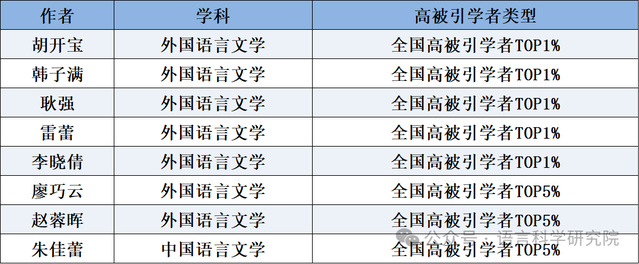
The selection of “CNKI Highly Cited Scholars” is based on a scientometric analysis of literature data indexed by CNKI over the past decade. Statistics show that approximately 17 million authors have published academic papers in China over the last ten years. Among them, 3.59 million authors have published at least one paper with a PCSI (Paper Citation Standardized Index) value exceeding the average, accounting for about 20% of all publishing authors. Only this group qualifies for preliminary selection. Through rigorous calculation and ranking of the total PCSI values of these scholars over the past decade, the final list identifies scholars whose research impact ranks among the highest in their respective fields.
In this announcement, five faculty members from our institute were ranked in the top 1%, and five were ranked in the top 5%. The collective recognition of eight scholars reflects the fruitful outcomes of the institute’s commitment to high-quality research development. This achievement not only demonstrates the scholars’ ability to consistently produce high-impact research in their respective fields, but also highlights the institute’s comprehensive strength in research team development, academic environment cultivation, and research administration. The institute will continue to uphold its pursuit of excellence and promote the advancement of language science research.
About the Scholars
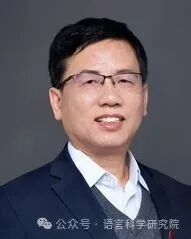
Hu Kaibao
Professor, Doctoral Supervisor, Shanghai International Studies University. He is a Distinguished Professor under the Ministry of Education’s Major Talent Program, Chief Expert of a Major Project of the National Social Science Fund of China, and Head of the Ministry of Education’s Huang Danian-style Faculty Team. He currently serves as Assistant to the President of Shanghai International Studies University, Dean of the Institute of Language Sciences, Executive Member of the Translators Association of China, Executive Member of the China Association for Comparative Studies of English and Chinese and Director of its Foreign Language Discipline Development Research Committee, and President of the Shanghai Science and Technology Translators Association. He is Editor-in-Chief of the international journal Corpus-based Studies across Humanities, a member of the editorial board of Corpora, a member of the editorial boards of the CSSCI journals Foreign Languages in China and Shanghai Journal of Translators, Editor-in-Chief of the Advances in Applied Linguistics book series (Routledge) and the Corpora and Intercultural Studies book series (Springer), and a member of the editorial board of the Advances in Corpus Linguistics book series (Routledge).
He has long been engaged in research in corpus-based translation studies and discourse studies. He has led 26 research projects, including Major Projects of the National Social Science Fund, special projects of the National Development and Reform Commission, special projects of the National Language Commission, special projects of the International Communication Bureau of the Publicity Department of the Central Committee, and major special projects of Shanghai. He has published nearly 120 papers in prestigious academic journals such as Babel, Perspectives, Meta, Foreign Language Teaching and Research, Journal of Foreign Languages, and Chinese Translators Journal. He is the author of ten academic works, including Introduction to Corpus-based Translation Studies, Corpus-based Translation Studies, and Introduction to Corpus-based Critical Translation Studies. He has also served as Editor-in-Chief for the national “Eleventh Five-Year Plan” textbook series New Horizon College English Extensive Reading and the New Era College Applied English textbook series. He currently leads special projects of the National Language Commission and major special projects of Shanghai, focusing on language data sharing platforms and domain-specific language data processing.
In 2009, he received the Shanghai Yucai Award. In 2013, he was awarded the Second Prize for Outstanding Higher Education Achievement by Shanghai. In 2015, he received the Third Prize for Outstanding Scientific Research Achievement (Humanities and Social Sciences) from the Ministry of Education (7th Award Cycle). In 2022, he received the Second Prize for Outstanding Achievement in Philosophy and Social Sciences from Shanghai (15th Award Cycle). In 2024, he received one Second Prize (as lead author) and two First Prizes (as co-author) for Outstanding Scientific Research Achievement (Humanities and Social Sciences) from the Ministry of Education (9th Award Cycle).
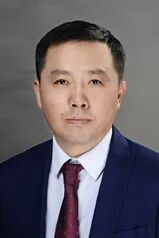
Han Ziman
Professor, Doctoral Supervisor, Shanghai International Studies University. He is an Executive Member of the China Association for Comparative Studies of English and Chinese, a Council Member of the Translators Association of China, and Secretary-General of the Shanghai Science and Technology Translators Association. He has led and completed multiple research projects at or above the provincial/ministerial level and currently leads a Key Project of the National Social Science Fund of China. He has published over 90 academic papers, six monographs, and nine translated works, completing over three million words of translation. In recent years, his research has focused on corpus-based translation studies, translation and war, and the translation of Chinese literature into foreign languages.
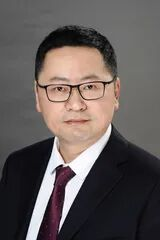
Geng Qiang
Professor, Doctoral Supervisor, Postdoctoral Supervisor, Shanghai International Studies University. He is Chief Expert of a Key Project of the Ministry of Education, Secretary-General of the Translation Studies Committee of the Shanghai Foreign Literature Association, a Council Member of the Chinese Comparative Literature Association’s Translation Studies Society, and a Council Member of the Translation Culture Studies Society under the Chinese Association of Comparative Studies of Languages and Cultures. His research interests include digital humanities, Chinese discourse on translation, Chinese and Western translation history, mediational translation studies, and the translation of Chinese literature into foreign languages. He has published over 70 academic papers, led eight research projects at the national, provincial, and ministerial levels, and published five monographs and translations. He currently leads a team of students in research projects on big data-based translation history and database-driven translation discourse studies.
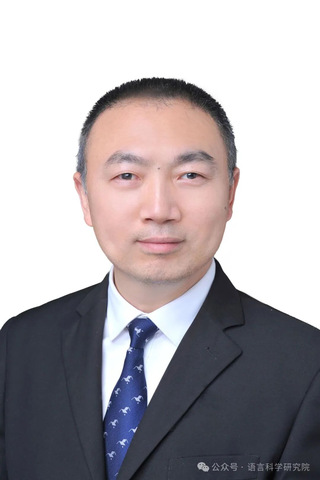
Lei Lei
Professor, Doctoral Supervisor, Shanghai International Studies University. His research interests include corpus-based and quantitative studies of lexical and syntactic description and diachronic change in modern Chinese, classical Chinese, and English, learner language, and digital humanities in language studies. He has published five monographs with Cambridge University Press and other publishers. He has published over 50 research articles and over ten book reviews in SSCI-indexed journals such as Applied Linguistics, Journal of Second Language Writing, System, Language Teaching, and Corpus Linguistics and Linguistic Theory, with two articles selected as ESI Highly Cited Papers. He has also published over ten articles and book reviews in CSSCI-indexed journals. He has led two projects funded by the National Social Science Fund of China. He serves as an editorial board member for journals including Journal of English for Academic Purposes (SSCI) and as Associate Editor of Corpus-based Studies across Humanities (De Gruyter). He has been recognized as a Highly Cited Chinese Researcher by Elsevier.
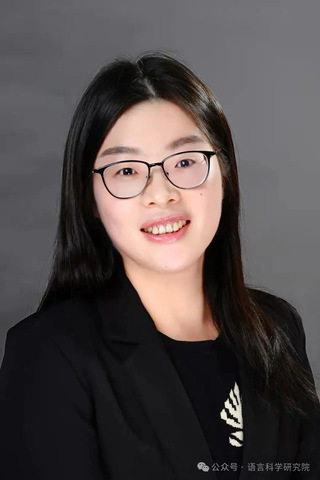
Li Xiaoqian
Ph.D., Assistant Research Fellow, Shanghai International Studies University. Her research interests include corpus-based translation studies, image studies, and discourse studies. She leads a Youth Project funded by the National Social Science Fund of China and has completed a General Grant from the China Postdoctoral Science Foundation. She has published nearly 20 papers in journals such as Meta, Chinese Translators Journal, Foreign Languages in China, and Technology Enhanced Foreign Language Education.

Liao Qiaoyun
Ph.D., Professor, Shanghai International Studies University. She serves as a Doctoral Supervisor and Postdoctoral Supervisor in English Language and Literature and Foreign Linguistics and Applied Linguistics. She is a communication review expert for projects funded by the National Social Science Fund of China and the Ministry of Education Social Science Fund, as well as a dissertation review expert for the Degree Center of the Ministry of Education. Her professional leadership includes serving as Vice Chair of the Embodied-Cognitive Linguistics Committee of the Chinese Association for Promoting Culture, Vice Chair of the China Language Education Association, Vice Chair of the China Cognitive Neurolinguistics Association, and standing committee member of both the Cognitive Linguistics Professional Committee of the China Association for Comparative Studies of English and Chinese and the specialized committee for Chinese and Western Philosophy of Language within the same association.
Professor Liao is currently leading a Key Project of the National Social Science Fund of China. She has previously directed two projects funded by the National Social Science Fund and six provincial/ministerial-level research projects. She has also led two key projects in higher education teaching reform at the provincial level. Her courses have received prestigious recognitions, including being designated as a National First-Class Course, a Shanghai Key Course, a Shanghai First-Class Course, and a course featured on Chinese MOOC platforms. Her primary research interests lie in Cognitive Linguistics, Cognitive Pragmatics, and Cognitive Neurolinguistics. She has authored six books, including Research on the Operation Mechanism of Causal Constructions and Cognitive Neural Mechanism of Semantic Rhetoric. She has published over 80 papers in leading national and international journals indexed in CSSCI, A&HCI, SSCI, and SCI, such as Foreign Language Teaching and Research, Journal of Foreign Languages, Modern Foreign Languages, Journal of Pragmatics, Journal of Neurolinguistics, Language and Cognition, and the International Journal of Applied Linguistics. Her accolades include being named one of the “Fourth Batch of Chongqing Young and Middle-aged Experts with Outstanding Contributions,” receiving the Baosteel Outstanding Teacher Award, a second prize in the National Higher Education Teaching Achievement Award, two second prizes for provincial/ministerial Outstanding Achievements in Social Sciences, and both a first and third prize for provincial/ministerial Higher Education Teaching Achievement Awards.
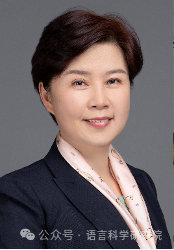
Zhao Ronghui
Ph.D., Professor, Doctoral Supervisor, Postdoctoral Supervisor, Shanghai International Studies University. Her research fields include sociolinguistics, language policy, language education, and the history of language and linguistics. She earned her Bachelor’s and Master’s degrees in Russian Language and Literature from the PLA University of Foreign Languages, her Ph.D. in Russian Language and Literature from Shanghai International Studies University, and completed postdoctoral work in Foreign Languages and Literatures at the PLA University of Foreign Languages. She has previously served as Dean of the Graduate School at SISU (2016–2023), Dean of the Institute of Linguistics at SISU (2011–2018), and Deputy Director of the Shanghai Social Survey Center’s SISU Branch (2008–2016). She currently serves as Executive Director of the National Research Center for Foreign Language Strategies (2011–), the first research base established by the National Language Commission and a national language policy think tank, and Director of the “111 Project” Base for Innovation in Language Policy and Language Education Studies (2019–). She has been a visiting scholar at the University of Maryland, the University of Hong Kong, and Seikei University. She has been honored as a New Century Excellent Talent by the Ministry of Education, a Leading Talent in Shanghai, a Distinguished Professor of the Chutian Scholars Program, a Jianhu Scholar, and a Zhiyuan Distinguished Scholar. She has been recognized as an Advanced Individual in Language Work by the City of Shanghai and an Outstanding Communist Party Member by the Shanghai Education and Health Committee. She has led 28 research projects, published 26 books, authored over 130 papers, and received nine provincial/ministerial research and teaching awards. She currently serves as Chair of the Sociolinguistics Branch of the Chinese Linguistic Society, Vice Chair of the Language Policy and Language Planning Branch of the Chinese Linguistic Society, Executive Member of the Chinese Linguistic Society, Executive Member of the Chinese Association for Modernization of the Chinese Language, and Executive Member of the Interface Studies Committee of the China Association for Comparative Studies of English and Chinese. She is Editor-in-Chief of Annual Report on World Language Situation and Chinese Sociolinguistics, and Series Editor of the Language Policy and Language Education Series, the World Language Policy Documents Series, and the Foreign Language Strategy Series.

Zhu Jialei
Ph.D., Associate Research Fellow, Master’s Supervisor, Shanghai International Studies University. Her research focuses on formal linguistics, the syntax-semantics interface, child language acquisition, and Chinese dialects. She has published over ten papers in core academic journals at home and abroad, as well as one monograph. One of her papers has been reprinted in full by the Renmin University of China’s Copy Center for Newspapers and Periodicals in the Language and Philology volume. She has led and completed projects funded by the National Social Science Fund of China and the Shanghai Philosophy and Social Science Planning Program, and has participated as a key researcher in a National Key Project and a GRF project in Hong Kong. She currently serves as a member of the Sixth Council of the Formal Linguistics Professional Committee of the China Association for Comparative Studies of English and Chinese.