Speaker Biography
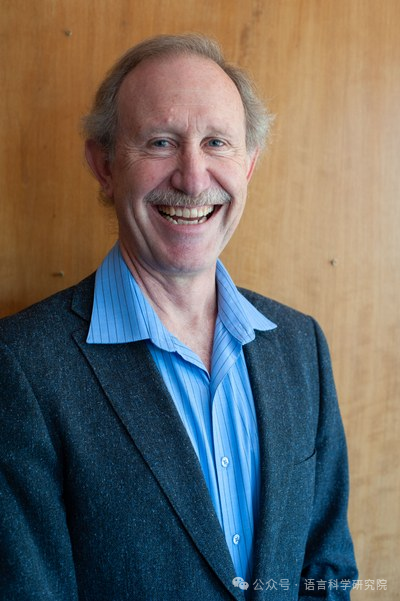
Kobus Marais is Professor of Translation Studies at the University of the Free State, Bloemfontein, South Africa, and a leading international scholar in the field of translation studies. He is currently a core researcher in several international academic research projects, with longstanding expertise in translation studies and interdisciplinary theoretical integration, and his scholarly work has garnered extensive international influence. He has led multiple international research projects and has published three monographs: Translation Theory and Development Studies: A Complexity Theory Approach (2014), A (Bio)Semiotic Theory of Translation: The Emergence of Social-Cultural Reality (2018), and Trajectories of Translation: The Thermodynamics of Semiosis (June 2023). He has also edited or co-edited several academic volumes, including Translation Beyond Translation Studies (2022), Translation Studies Beyond the Postcolony (2017, co-edited with Ilse Feinauer), Complexity Thinking in Translation Studies: Methodological Considerations (2018, co-edited with Reine Meylaerts), The Routledge Handbook of Translation Theory and Concepts (2023, co-edited with Reine Meylaerts), and The complexity of social-cultural emergence: Biosemiotics, semiotics and translation studies (2024, co-edited with Maude Gonne). His research interests span translation studies, semiotics, biosemiotics, complexity theory, and development studies. He has published numerous influential articles in top-tier international journals, providing foundational theoretical support for the interdisciplinary development of translation studies.
Lecture Time & Venue
Lecture Time: December 5 (Friday), 13:00–14:30
Lecture Venue: Room 136, Teaching Building No. 5, Songjiang Campus
Lecture Title
Exploring an Ecology of Translation
Lecture Abstract
Driven by the trend toward interdisciplinary integration in translation studies, biosemiotic theory offers a new dimension for addressing debates within eco-translation studies. This lecture will focus on the core insights that biosemiotic translation theory provides for eco-translation studies, systematically reviewing current mainstream ontological and epistemological positions and analyzing the weaknesses and potential issues in the ontological foundations of some existing theories.
Building on Kalevi Kull’s four-level ontological framework, the lecture will further expand to construct a five-level ontological system, establishing a theoretical foundation for the intersection of translation and ecology. Drawing on John Deely’s notion of semiotic realism, it will develop a complex ontology-epistemology that is both rigorous and inclusive. Ultimately, the lecture will argue for the crucial mediating role of translation between ontology and epistemology, as well as between mutually exclusive ontological-epistemological positions, proposing an innovative scholarly framework of an “ecology of translation” that offers new perspectives and pathways for research in related fields.