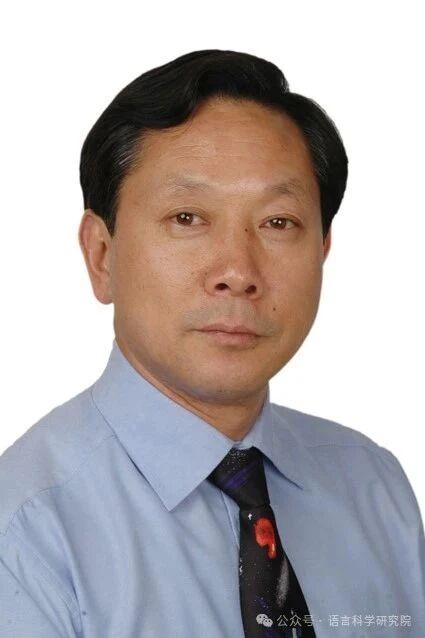
Speaker Biography
Liu Zequan is a Second-Class Professor and Doctoral Supervisor at Henan University, a Distinguished Professor of Henan Province, and holds a Ph.D. in Translation Studies from the National University of Singapore. His research interests include corpus-based translation studies, critical discourse analysis, functional linguistics, and stylistics and writing. He has successively led and completed four projects funded by the National Social Science Fund of China, including the Chinese Academic Translation Project The Origin of Chinese Civilization (English translation), the key project A Centennial History of Women's Literary Translation in Mainland China, Taiwan, and Hong Kong, and the general projects The Creation and Application of a Chinese-English Parallel Corpus of Hong Lou Meng and The Compilation of a Chinese-English Cultural Dictionary of Hong Lou Meng . In the past decade or so, he has published over 50 papers in journals indexed in SSCI, A&HCI, and CSSCI, such as META: Translators' Journal, Journal of Chinese Linguistics, Chinese Translators Journal, Foreign Language Teaching and Research, Contemporary Linguistics, and Journal of Foreign Languages. He has also authored monographs including The Creation and Application of a Chinese-English Parallel Corpus of Hong Lou Meng, A Quantitative Study of Multiple Translations of Hong Lou Meng, and Chinese Women Translators. His translation The Origin of Chinese Civilization (English version) was awarded the 2023 Outstanding Export Book Award by the International Cooperation Publishing Committee of the Publishers Association of China and the Chinese Academy of Press and Publication.
Time and Venue
Date & Time: Tuesday, May 20, 2025, 16:00–17:00
Venue: SISU Songjiang Campus, Building 5, Room 136
Lecture Title: An Empirical Study of the Gap Between Machine Translation and Human Translation: A Case Study of Academic Translation for International Communication
Lecture Content Summary
Since the advent of ChatGPT, research on machine translation has rarely focused on the translation of literary texts rich in creativity and emotion, or humanities academic texts imbued with cultural values, with the aim of systematically comparing the strengths, weaknesses, issues, and potential improvements of machine translation versus human translation. This study takes the Chinese source text and its English translation of The Origins of Chinese Civilization, a project supported by the author’s National Social Science Fund of China (National Funding for Social Sciences Abroad), as a reference. It develops a mixed-method framework for evaluating translation quality by combining quantitative methods, such as Coh-Metrix, WordSmith, BLEU, and TER, with qualitative methods centered on key translation difficulties at the lexical, sentential, and discourse levels. Using this framework, the study examines the similarities, differences, strengths, and weaknesses between human translation and six machine translation systems: ChatGPT, Gemini, Google Translate, DeepL, Youdao, and ERNIE Bot. The findings reveal that, in terms of quantitative textual representation, the six machine translations exhibit a pronounced convergence, yet they diverge significantly from the human translation across four dimensions: lexical richness, narrativity, cohesion, and readability. Qualitatively, of the 328 key translation difficulties identified in the source text, the average accuracy rate of the six machine translations stands at 17.49%. The application of intelligent tools such as ChatGPT to Chinese-to-English translation of complex humanities academic texts necessitates extensive training and specialized deep learning focused on specific translation difficulties, the optimization of memory mechanisms, and the “distillation” of expert translators’ knowledge and experience into the language models.