Speaker Biography
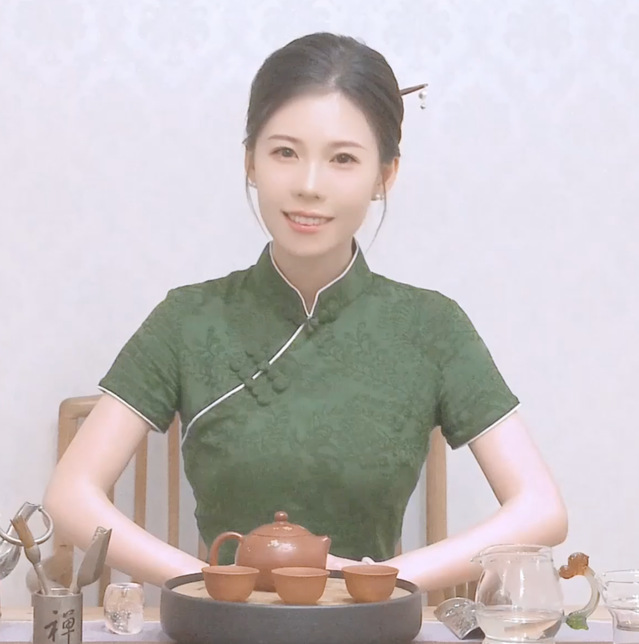
Lin Zhi is an Associate Professor and Master's Supervisor at the School of Foreign Languages, Dalian Maritime University. She holds a Ph.D. from Shanghai International Studies University and was a Visiting Scholar at Duke University. She has led multiple research projects, including those funded by the Ministry of Education's Youth Fund for Humanities and Social Sciences Research and the Liaoning Provincial Social Science Fund. She has also participated in four high-level research projects, including projects funded by the National Social Science Fund and key projects of the Ministry of Education. She is the author of A Cross-Cultural Analysis and Enhancement of China's Image as the Homeland of Tea and has published numerous papers in core Chinese journals such as People's Daily (Theory Section) and Chinese Comparative Literature. She has independently translated seven English programs for CCTV's Education Channel and participated in the translation of The Classic of Tea, The Sequel to the Classic of Tea, and International Tea Artist Level Assessment (bilingual English-Japanese edition). She has also co-edited several textbooks included in the national 13th Five-Year Plan and 14th Five-Year Plan.
Her awards include second place in the final of the 9th FLTRP Star of Teaching National Competition, the Grand Prize (National Level) in the 9th National College English Teachers' Basic Teaching Skills Competition (Micro-Lesson Category), and the first prize (National Level) in the 12th SFLEP National College Foreign Language Teaching Competition (Translation Category). She holds certifications as a Senior Tea Artist in China, CATTI Level 2 Chinese-English Consecutive Interpreter, Japanese-Language Proficiency Test N1, and is a Cambridge English Language Assessment certified oral examiner. She has provided interpretation services for distinguished figures such as leaders of the Ministry of Transport of China, the Secretary-General of the International Maritime Organization, and a former U.S. Secretary of Labor. She has also undertaken simultaneous interpretation tasks for international conferences, including the inauguration ceremony of the Shenzhen International Maritime Sustainable Development Research Center and the China Convention and Exhibition Economic Innovation and Development Forum. Under her guidance, students have won national awards, including the silver prize in the final of the 2023 FLTRP·Guocai Cup National Speech Competition and the first prize (National Level) in the final of the 2nd Ruyi Cup International Translation Competition (Interpretation Category). She has also appeared in and guided students in producing over 30 multilingual short videos in the Telling the Story of Chinese Tea Culture series.
Time and Venue
Date & Time: Thursday, December 19, 2024, 12:00–13:00
Venue: SISU Songjiang Campus, Lecture Hall 136, Building 5
Lecture Title: The Historical and Contemporary Construction of Tea Culture's National Image and Its Future Prospects: Insights from Tea Diplomacy
Lecture Content Summary
Over thousands of years, tea culture has emerged and developed on Chinese soil. Tea has been endowed by its unique ecological and cultural context with distinctive connotations that align with the Chinese people's morality, values, outlook on life, and worldview: revering the laws of heaven and earth above, while conforming to socially recognized virtues below. It has gradually become a symbol of the connection between the self and the world, and has also made significant contributions in international interactions. Tea Diplomacy represents a warm and vivid scene within the new normal of contemporary Chinese diplomacy. Using tea as a flexible fulcrum, it enhances China's image as trustworthy, lovely, and respectable. This diplomatic form skillfully integrates tea culture into foreign practices rich with Chinese characteristics. Using tea as a medium and a topic for discussion—through appreciating, tasting, gifting, and debating tea—it not only fosters mutual understanding and mutual learning among civilizations with other countries but also promotes win-win economic and trade cooperation and development. Furthermore, it provides a harmonious and friendly atmosphere for resolving international disputes and advancing global governance, fully demonstrating the value pursuit of harmony shared worldwide through tea and the image of a major country. As local translation studies scholars, we bear the mission of facilitating the higher-quality and more efficient dissemination of Chinese tea culture worldwide, striving to highlight its traditional spirit, contemporary value, and global significance.